
Retired Biology Faculty Research, Publications and Presentations
Recent Submissions
-
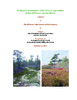
Regeneration of Forest and Barrens after the Spryfield Fire
(2010-09-02)This set of annotated photos illustrates the regeneration of vegetation over 16 months after an intense fire that swept through forest and barrens in the vicinity of Spryfield, Nova Scotia on April 30/May 1 of 2009. The ... -
Estimation of growth rate, production and age of the marine angiosperm Thalassia testudinum König
(University of Puerto Rico, 1973)There is a linear relation between average growth rate and the average maximum leaf length of Thalassia stands. The ratio production-to-standing crop (wet weight including epiphytes) tends to be constant. New foliage leaves ... -
Preliminary observations of the status of shallow water reefs at Sandy Island, Carriacou, Grenada
(1996-10-29)Sandy Island is an uninhabited cay lying off the west coast of Carriacou. Surrounded by clear waters and coral reefs, with an extensive white sand beach and quiet water on its south side and a palm canopy on the island, ... -
"Migration" of blowouts in seagrass beds at Barbados and Carriacou, West Indies, and its ecological and geological implications
(Elsevier Scientific Publishing Company, 1975)Blowouts are grass-free depressions within seagrass beds at Barbados and Carriacou and reported in the literature to be common elsewhere in the Caribbean region. They are typically crescent-shaped in plan view with the ... -
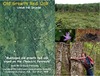
Multi-aged old growth red oak stand on the Chebucto Peninsula
(2016-10-20)A Rapid Appraisal study was conducted July 21-22, 2009 to verify existence of and characterize an old growth red oak stand on Umlah Hill southeast of Oak Hill Lake in the Five Bridge Lakes Wilderness area on the Chebucto ... -
The Chebucto Peninsula: A Significant Conservation Area
(www.ourhrmalliance.ca, 2015-08-09)The Parks and Protected Areas on the Chebucto Peninsula on Nova Scotia’s Atlantic coast and some of the features that make the whole peninsula a significant conservation area are described and illustrated with maps and photos. -
Landscapes of the Five Bridge Lakes Wilderness Area: A Natural History
(Woodens River Watershed Environmental Organization, 2010-02-17)The Five Bridge Lakes Wilderness Area (FBLWA) lies about 20 kilometers west of downtown Halifax, Nova Scotia. It encompasses 8,626 hectares hectares of Crown land located in the centre of the Chebucto Peninsula on Nova ... -
The State-Spaced Integrated assessment model for Newfoundland's 'northern cod' as a stock assessment model that fails to distinguish between normative and natural laws
(2018-02-06)Stock assessment models for Atlantic Canada's groundfish fisheries such as Noel Cadigan's recent State-Spaced Integrated assessment model for Newfoundland's 'northern cod' involve single premised inductive arguments that ... -
Reflections on the failure of traditional fisheries management
(2017-01)A traditional fisheries management or fish stock assessment takes a Lamarckian-like instructive view of fisheries science that involves an inductive monism. Its invalid inductive arguments have no problem solving capacity ... -
Reflections on the failure of traditional fisheries management
(2016-06-03)A traditional fisheries management or fish stock assessment takes a Lamarckian-like instructive view of fisheries science. Its invalid inductive arguments have no problem solving capacity and are responsible for the collapse ... -
Demise of the garden of Acadia
(DVL Publishing Inc., Liverpool, Nova Scotia, 1981-07)In the late 1970s, plans were being developed for construction of a tidal power barrage at the mouth of the Annapolis River. Much of the land by the river in that area was dyked and was used by farmers for grazing and ... -
Water quality measurements on Williams Lake and Colpitt Lake (Halifax, N.S.) Dec 7-13, 2015 with reference to possible impacts of road salt
(Williams Lake Conservation Company, 2016-01-06)Concerns have been expressed by the Williams Lake Conservation Company (WLCC) about possible effects of renewed salting of roads close to Williams Lake on water quality of the lake. Such salting was replaced by sand and ... -
What is a fish stock assessment? Is it a sound method? Can it be used to manage a commercial fishery?
(2015-09)Under Karl Popper's non-inductive theory of method arguments are never carried from data to advice as in a fish stock assessment. That is: a distinction or 'demarcation' has to be made between (i) a Lamarckian-like inductive ... -
The sound management of a fishery as a social engineering: applying Karl Popper's demarcation criterion to an Area 2 stock of Pacific halibut
(2014-10-23)The Newfoundland fishery for Atlantic cod was once the largest cod fishery in the World. In the early 1990s this fishery formed part of an Atlantic Canadian groundfish fishery collapse that has become one of the World's ... -
Critical thinking through the eyes of Richard Paul and Karl Popper
(2014-10-08)This 1993 workshop marks the beginning of my new logical or metaphysical research program on the application of Karl Popper’s non-inductive theory of method to the management of the World’s commercial fisheries. The view, ... -
Ecological Assessment of the Plant Communities of the Williams Lake Backlands
(The Williams Lake Conservation Company, 2014-02-12)The Williams Lake Backlands (WLB), covering approximately 200 ha, are the larger, undeveloped part of the Williams Lake Watershed which includes Colpitt Lake and Williams Lake. The WLB are part of "Purcell's Cove Backlands" ... -
Distinguishing input controls from ouput controls in Atlantic Canada's fisheries: explaining the decline and collapse of Newfoundland's Atlantic cod stocks
(2013-03-14)The lobster and groundfish fisheries of Atlantic Canada have been managed in very different ways. The Atlantic lobster fishery has been managed by input controls in which regulations have been developed by a posteriori ... -
Biological husbandry and the "nitrogen problem"
(Biological Agriculture and Horticulture, 1986)Since 1978, the author has been conducting research into the theory and practice of biological husbandry in collaboration with a farmer who stopped using pesticides and mineral fertilizers in 1976. Eggs are exported from ... -
Some notes on the Aristotelian origin of the distinction between a falsificationist's and verificationist's view of science: together with corrections to my earlier account
(2012-10-31)It has not always been realised that Karl Popper's analytic distinction between the logically stronger falsificationist's view of science and the logically weaker verificationist's and inductivist's view of science is a ...


 RSS 1.0